
Consumers are treating loyalty rewards as routine financial tools, not aspirational bonuses
Rising cost-of-living pressure is shifting how households use payment rewards—from occasional indulgences toward deliberate, everyday value recovery. If rewards are becoming part of baseline spending optimization rather than spending stimulation, loyalty program design and success metrics may need to reset.
Subscriber · Sign in to listen to the audio briefing
Audio briefings are available to subscribers. Sign in with the email you used to subscribe — we'll send a one-time code.
Despite what you hear in the news about inflation, consumers are responding to the persistent increase in the cost of living, particularly in how that pressure is influencing everyday financial decisions. We often focus on the more visible adjustments: switching brands, buying private-label products, postponing purchases, or shopping at discount retailers. But there's another behavior that I believe deserves more attention. Consumers appear to be becoming more deliberate about using loyalty points, credit card rewards, cashback, and promotional offers to stretch their purchasing power. The question is whether the way these long-established benefits play in household finances is changing.
For years, the payments industry has viewed loyalty primarily as a mechanism for customer acquisition, retention, and spending stimulation. Merchants use rewards to encourage repeat purchases, while financial institutions offer points, miles, and cashback to influence payment preferences and card usage. Traditionally, rewards often meant something extra: a vacation, an upgrade, or an occasional indulgence. Those motivations remain, but a more practical dimension may be emerging. When someone uses points to reduce a grocery bill, combines promotions to save on gasoline, or applies cashback toward a credit card statement, the benefit becomes more than an incentive for future consumption. It becomes another way to preserve purchasing power.
When rewards become part of everyday spending
One important aspect of inflation is that consumers continue to experience its effects long after the rate of price increases begins to moderate. Lower inflation doesn't mean prices have returned to previous levels. After years of increases in food, transportation, housing, and other necessities, households face a different cost structure. Even consumers whose incomes have risen may pay closer attention to the value of individual purchases.
Recent research illustrates how spending behavior is adapting. McKinsey's State of Grocery North America 2026 found that 43% of surveyed grocery shoppers were relying more on promotions to save money, while another 43% reported comparing prices more carefully. More than half had reduced impulse purchases. Loyalty programs and payment rewards belong in that conversation as another way to recover value from planned purchases.
The change becomes more apparent when examining how consumers redeem rewards rather than simply accumulate them. A July 2026 USAA Bank report found that 36% of consumers with credit card rewards were using their points immediately to offset everyday expenses, including groceries, gasoline, and bills. The report also found that 42% of respondents redeemed points monthly to lower statement balances. Separately, research published by Citizens in September reported that 51% of surveyed credit card users viewed perks as a way to get more value from spending they were already doing, while 34% had used perks to free up cash to pay down debt. The surveys measure different behaviors, but they point in a similar direction.
So, certainly the data suggests a change; however, I wouldn't suggest that rewards are replacing income or becoming essential to household subsistence. Their economic contribution is generally much more modest. But that doesn't make it irrelevant. Small, repeated savings can provide financial flexibility. More importantly, consumers may be incorporating them deliberately into their financial routines.
From loyalty-driven spending to value-driven loyalty
Fuel purchases offer an interesting illustration because gasoline remains a necessity for many households. Verifone's analysis of more than 590 million fuel transactions during the summer of 2026 found that consumers saved approximately $82.8 million through loyalty and rewards programs. It also identified a 23% increase in pump stacking, the practice of combining multiple discounts on the same purchase, from late May to the final weeks of summer. Although stacking still accounted for only about half of one percent of transactions, the increase suggests that some consumers are becoming more sophisticated in how they identify and combine available benefits.
A separate Verifone study of 45.8 million fuel transactions found that only 24% involved presenting a loyalty or rewards card, and only about one-third of those resulted in a per-gallon discount redemption. Not every non-redemption represents a missed saving, but the participation gap suggests that making existing benefits easier to use may matter as much as creating new ones.
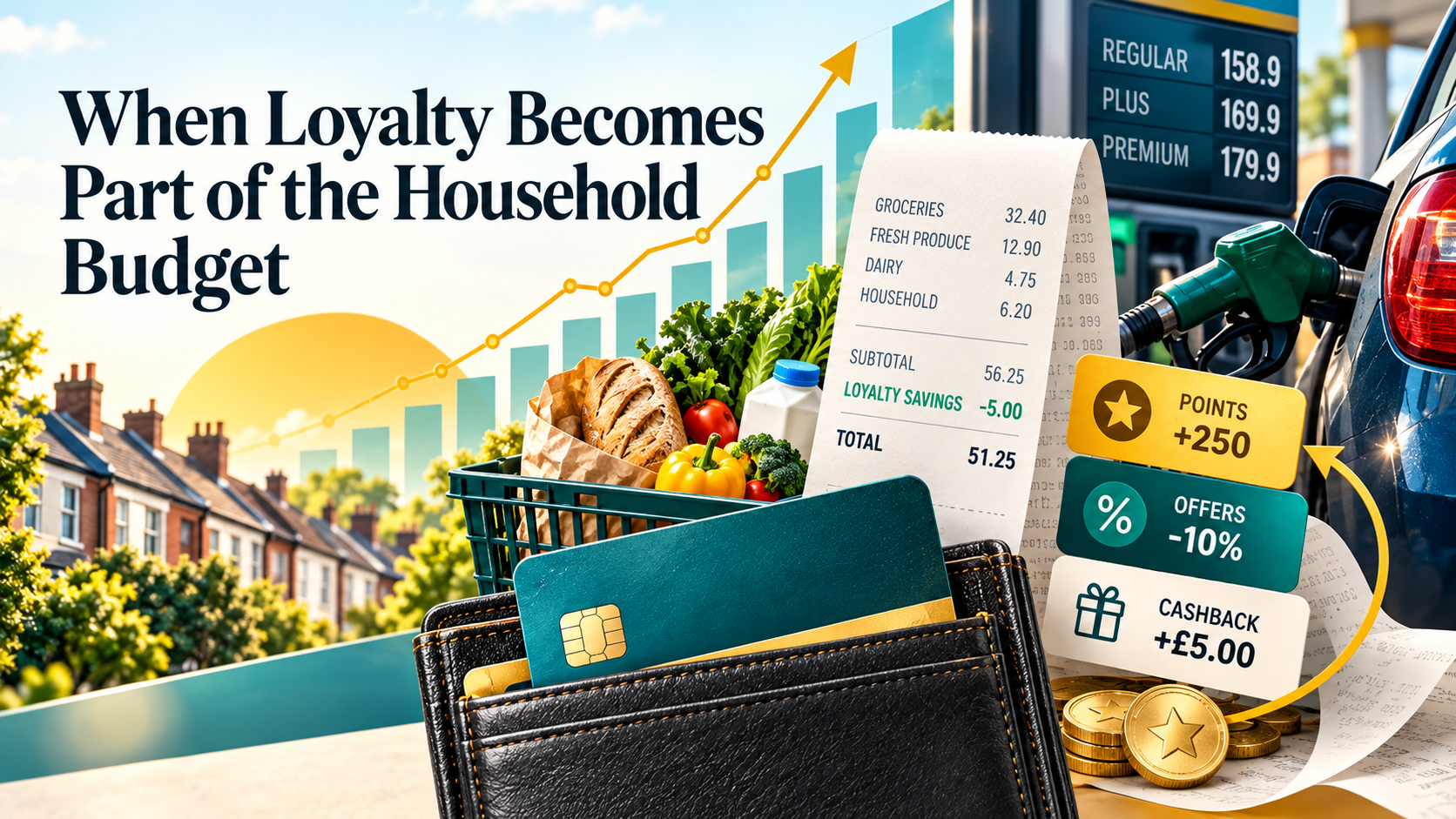
This raises an interesting question about what loyalty actually means from the consumer's perspective. Programs traditionally encourage customers to spend more, visit more often, or concentrate purchases with one provider. But a consumer comparing grocery promotions, selecting a card based on cashback, or choosing a fuel retailer because of available discounts may be pursuing a different objective. Rather than demonstrating greater loyalty to a particular brand, that customer may simply be directing spending toward whichever combination of price, convenience, and rewards delivers the greatest value.
I find this distinction relevant because it challenges how we measure loyalty program success. Merchants measure incremental sales and retention; issuers focus on card activity and spending. Those objectives don't necessarily reflect how consumers evaluate the same programs. If more customers approach rewards as a way to optimize existing spending rather than justify additional purchases, the industry may need to reconsider how it balances spending incentives with the financial value delivered to customers.
And this is not solely about financially constrained households. The Citizens survey found that 76% of respondents in households earning $150,000 or more prioritized rewards rates or cashback when choosing their most frequently used card. Yet only 11% of that group felt extremely confident they were capturing the full value of their perks. The appeal of spending optimization clearly extends beyond financial necessity.
What this means for the payments industry
For banks, merchants, processors, and loyalty providers, I believe the implications extend beyond designing more generous rewards. The industry has invested heavily in digital wallets, personalized offers, and frictionless transactions, yet using rewards can still mean navigating apps, activating promotions manually, or decoding redemption rules. If these benefits are becoming part of everyday spending decisions, simplifying access to them becomes an important element of the value proposition.
I see considerable potential in bringing payments and loyalty closer together, particularly through experiences where eligible discounts can be identified automatically, rewards can be applied transparently at checkout, and consumers can understand the economic benefit of a transaction. Processors and technology providers can connect merchant offers, issuer programs, and transaction processing. The objective needn't be bigger rewards, but more accessible and relevant ones that remain commercially sustainable.
Of course, rewards aren't free, and their benefits shouldn't be overstated. Someone ultimately finances those incentives, whether through merchant expenditures, issuer economics, fees, or product pricing. A discount encouraging unnecessary purchases, or card rewards outweighed by interest, can leave consumers worse off. The opportunity is to deliver value on purchases they already intend to make.
I don't believe we're witnessing the disappearance of traditional loyalty or aspirational rewards. Consumers will still collect miles and enjoy their preferred brands. But a more practical dimension is emerging as households pay closer attention to spending. For merchants and financial institutions, loyalty has traditionally been about capturing a greater share of the consumer's wallet. For consumers, it may increasingly be about retaining a little more of what's already in that wallet.
Perhaps that's the question issuers should be asking themselves: Are we designing loyalty programs primarily to encourage consumers to spend more, or are we also helping them get more value from the money they already spend?
Franco Di Pietro
The Payments Corner
30+ years across payments, fintech, banking, and financial infrastructure. Operator-level perspectives on the systems that move money.
The author is employed at Euronet Worldwide, a card issuer processing company. The author may own securities or assets referenced across The Payments Corner ecosystem. Content is provided for informational and editorial purposes only and should not be considered investment advice.
Related Insights
Modern Loyalty Isn't Just a Marketing Capability. It's an Issuing Capability.
Loyalty programs are usually framed as a marketing challenge — points, offers, campaigns, promotions. But the more I observe how the most successful programs actually operate, the more I believe the real differentiator exists somewhere else entirely. Loyalty is quietly becoming an issuing capability.
In the Premium Card Market, Value Is Becoming the Real Currency
The premium card market has become one of the most competitive segments in payments. But rewards alone are not where the true differentiation resides. Increasingly, value is measured through the totality of the relationship — trust, service consistency, transparency, and how the institution behaves during the moments that matter most.
Consumers Experience Credit Very Differently Than Institutions Model It
Most credit models assume people think in terms of credit limits, utilization, APRs, and revolving balances. But consumer behavior tells a very different story. Households experience credit through a much more immediate and practical lens — and that disconnect shapes everything from product design to underwriting logic.